Seasonal trends play a bigger role in the party supply industry than many retailers and event planners realize. From summer birthday booms to holiday-adjacent demand spikes, understanding how the calendar shapes birthday party product availability is essential for anyone who wants to keep shelves stocked and customers happy throughout the year.
Whether you run a party supply shop, work as a decorator, or manage procurement for a wholesale business, planning ahead is the single most effective way to avoid frustrating shortages. This article walks through the key questions surrounding seasonal demand and gives you practical answers to help you stay ahead of the curve.
What birthday party products are most affected by seasonal demand?
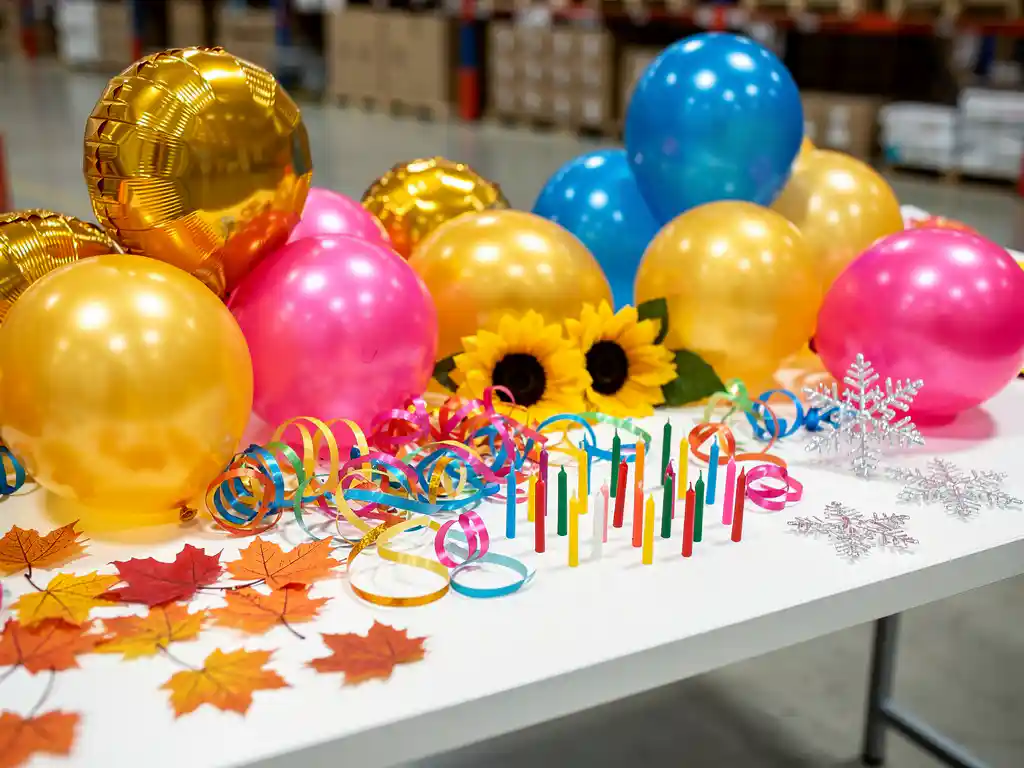
The birthday party products most affected by seasonal demand are latex and foil balloons, themed decorations, tableware sets, and color-specific accessories. These items experience sharp demand spikes around major holidays, school-year milestones, and peak celebration seasons, making them the most vulnerable to stock shortages when demand outpaces supply.
Balloons are consistently the most volatile product category. Specific colors, shapes, and character themes can sell out within days when a cultural moment or popular season arrives. Themed tableware tied to licensed characters also fluctuates heavily, as licensing cycles and media releases create unpredictable bursts of demand. Seasonal color palettes, such as pastels in spring or warm tones in autumn, further compound the challenge because suppliers and retailers often align their ranges to match these trends simultaneously.
Cake decorations and candles also see meaningful seasonal shifts, particularly around milestone birthdays that tend to cluster at the start of new school years and calendar years. Accessories like balloon weights, ribbon, and pump sets tend to follow balloon demand closely, so when balloon stock runs low, these supporting products often disappear from shelves at the same time.
Why do balloon and decoration stocks run low during peak seasons?
Balloon and decoration stocks run low during peak seasons because demand from multiple customer segments converges at the same time, while production and shipping lead times remain fixed. When retailers, decorators, and wholesalers all reorder simultaneously, warehouse inventory depletes faster than restocking cycles can compensate.
The supply chain for party products involves several stages, from raw material sourcing to manufacturing, quality checks, and international logistics. Latex balloons, for example, depend on natural rubber harvests, which have their own seasonal rhythms. When global demand spikes, manufacturers cannot simply increase output overnight. This creates a lag between demand and fulfillment that hits retailers hardest during the busiest weeks of the year.
Peak seasons in the party industry often overlap with other high-demand retail periods. The pre-summer window, the back-to-school period, and the run-up to end-of-year holidays all compress ordering windows and strain distribution networks. Retailers who wait until demand is already visible before placing orders frequently find that their wholesaler’s stock has already been allocated to customers who ordered earlier.
When should retailers order birthday party supplies to avoid shortages?
Retailers should order birthday party supplies at least 6 to 10 weeks before their anticipated peak demand period. For major seasonal spikes, ordering 3 months in advance is a safer strategy, particularly for high-volume items like balloons, themed tableware, and color-coordinated decoration sets.
The key is to distinguish between evergreen products and trend-driven items. Evergreen birthday staples, such as standard latex balloons in classic colors, number candles, and basic tableware, can be ordered on a rolling basis with relatively predictable lead times. Trend-driven products tied to popular characters, specific color trends, or licensed themes require earlier commitment because stock is often limited and allocated quickly.
Seasonal ordering windows to keep in mind
- Spring (March to May): Order by January or early February to cover Easter-adjacent celebrations and the spring birthday surge.
- Summer (June to August): Place orders in March or April, as this is one of the busiest birthday seasons of the year.
- Autumn (September to October): Order by July to account for back-to-school parties and early autumn celebrations.
- Year-end (November to December): Begin ordering in August or September, as this period competes with Christmas and New Year demand across the supply chain.
How can party supply businesses plan around seasonal availability gaps?
Party supply businesses can plan around seasonal availability gaps by combining forward ordering, product substitution strategies, and close communication with their wholesale partners. The goal is to build enough buffer stock before demand peaks while maintaining flexibility to pivot when specific items are unavailable.
One practical approach is to identify your top 20 percent of products by sales volume and treat those as priority lines for early ordering. These core items drive the majority of revenue and carry the highest reputational risk if they run out. For everything else, build a list of acceptable substitutes so your team can respond quickly when a specific product is unavailable without losing the sale entirely.
Maintaining an ongoing dialogue with your wholesale supplier is equally important. Suppliers with strong industry knowledge will often signal upcoming availability constraints before they become critical, giving you the chance to adjust your orders proactively. Joining industry bodies or networks can also provide early visibility into supply chain disruptions, trend shifts, and new product launches that affect planning cycles.
What trends are shaping birthday party product demand in 2025?
In 2025, the trends shaping birthday party product demand include a growing preference for sustainable materials, personalized decoration sets, bold and maximalist color palettes, and the continued influence of social media aesthetics on celebration styling. These trends are creating new demand patterns that do not always align with traditional seasonal cycles.
Sustainability is becoming a genuine purchasing criterion rather than a niche preference. Retailers are seeing increased interest in products made from compostable, FSC-certified, or biodegradable materials. Latex balloons that meet recognized safety and environmental standards are gaining favor over foil alternatives in certain markets, particularly among eco-conscious consumers planning children’s parties.
Personalization is another significant driver. Consumers increasingly want decoration sets that reflect a specific theme, color story, or character rather than generic birthday assortments. This trend pushes demand toward more specialized product lines, which can be harder to forecast and more susceptible to stock shortages when a particular theme goes viral on social platforms. For retailers, this means monitoring social media trends is now a legitimate part of inventory planning, not just marketing.
How Globos Europe helps with birthday party product availability
At Globos Europe, we understand that availability is not just a logistics issue; it is a business-critical concern for every retailer and decorator we work with. As a B2B wholesale partner with over 25 years of combined experience in the European party market, we are built to help our customers stay stocked through every season. Here is what we offer to support your planning:
- A broad and deep product range covering latex and foil balloons, tableware, themed decorations, cake accessories, and balloon accessories under our own We Fiesta brand and beyond.
- Sustainable product options including biodegradable latex balloons and FSC-certified and compostable products that meet growing consumer demand for eco-conscious choices.
- Consistent quality standards backed by our membership in the European Balloon and Party Council and Amfori, ensuring the products you stock meet recognized safety and environmental benchmarks.
- Private label options for businesses looking to build their own branded party product range with reliable supply behind it.
- Expert wholesale support from a team that actively monitors market trends and can advise on forward ordering strategies for peak seasons.
If you want to avoid seasonal shortages and build a more resilient party supply business, we are ready to help. Reach out to our team to discuss your product needs and seasonal planning, and let us make sure you have the right birthday party products in stock when your customers need them most.
Frequently Asked Questions
How do I know which birthday party products to stock more of versus which ones to order conservatively?
Start by segmenting your inventory into evergreen staples and trend-driven items. Evergreen products — like classic latex balloons, number candles, and neutral tableware — are safe to stock in higher volumes because demand is consistent year-round. Trend-driven items tied to licensed characters or viral color palettes should be ordered more cautiously in smaller test quantities until you can gauge actual sell-through, then reordered quickly if they move fast.
What should I do if my wholesale supplier runs out of a product I urgently need?
First, check whether your supplier has an acceptable substitute in a similar color, size, or theme — a good wholesale partner should be able to guide you toward alternatives quickly. Second, use this gap as a signal to review your forward ordering schedule, since running out is usually a symptom of ordering too close to peak demand. Going forward, flag that product as a priority line and commit to ordering it at least one full season ahead.
Is it worth holding extra buffer stock, or does that tie up too much cash?
For your top-selling 20 percent of products — the ones that drive most of your revenue — holding 4 to 6 weeks of buffer stock is generally worth the cash commitment, because the cost of a stockout (lost sales, unhappy customers, emergency shipping fees) almost always exceeds the carrying cost of the extra inventory. For slower-moving or highly trend-specific items, lean inventory is smarter to avoid being left with unsellable stock after a trend fades.
How can I use social media to improve my birthday party product forecasting?
Follow popular party styling accounts, event planners, and celebration hashtags on platforms like Instagram, TikTok, and Pinterest to spot emerging color palettes, character themes, and decoration styles before they peak in demand. When a particular aesthetic starts gaining significant traction, treat it as an early signal to check your stock levels and place orders sooner rather than later. Even a two-to-four week head start on a viral trend can make the difference between being the retailer who has the product and the one who sells out.
Are eco-friendly birthday party products harder to keep in stock than conventional ones?
Sustainable products can be more supply-constrained because they rely on certified raw materials — such as FSC-certified paper or responsibly sourced natural latex — that have their own production limitations. However, working with a wholesale partner who already carries a vetted range of sustainable products, like biodegradable latex balloons and compostable tableware, significantly reduces this risk. The key is to treat eco-friendly lines with the same forward ordering discipline you apply to your bestselling conventional products.
What is the biggest mistake party supply retailers make when managing seasonal inventory?
The most common mistake is reactive ordering — waiting until products are already selling fast before placing a reorder, at which point wholesale stock is often already allocated to customers who planned ahead. A closely related mistake is treating all products the same, when in reality licensed and trend-driven items need much earlier commitment than evergreen staples. Building a simple seasonal ordering calendar with firm trigger dates for each product category is one of the most impactful changes a retailer can make.
How do I start building a more structured seasonal ordering plan if I have never done it before?
Begin by reviewing your sales data from the past 12 to 24 months to identify which products spiked in demand and during which months — this gives you a data-backed baseline rather than relying on memory. Map those spikes against the seasonal ordering windows outlined in this post (spring, summer, autumn, and year-end) and set calendar reminders to place orders 6 to 10 weeks before each window opens. Then reach out to your wholesale partner to discuss your plan, as experienced suppliers can flag any upcoming availability constraints or new product launches that should factor into your ordering decisions.
Related Articles
- What are the most common mistakes when buying balloons wholesale?
- What party products are available wholesale?
- How does bulk balloon buying fit into a party products wholesale order?
- What types of balloons are available wholesale?
- What is the difference between wholesale balloons and party supply store balloons?