
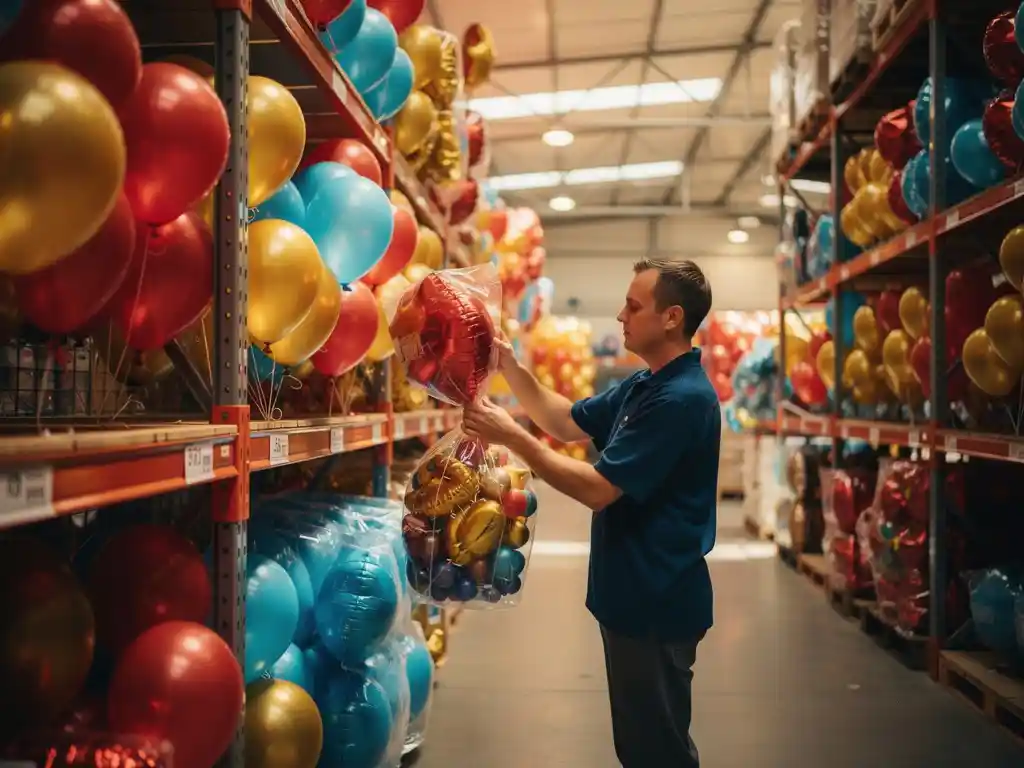

Running a party supplies store means balancing creativity with serious logistics, and nothing tests that balance quite like a large balloon order. Whether it’s a wedding venue needing five hundred helium-filled latex balloons or a corporate client requesting custom foil displays, the stakes are high and the margin for error is low. Understanding how professional party stores manage these orders can help both retailers and their customers achieve better results every time.
From inventory planning to supplier relationships, large balloon orders involve more moving parts than most customers realize. This guide walks through the key questions every party supplies store should be able to answer when bulk balloon orders come in.
How do party supplies stores typically manage large balloon orders?
Party supplies stores manage large balloon orders through a combination of advance planning, dedicated inventory allocation, and clear communication with both suppliers and customers. Most stores treat bulk orders as separate projects, assigning specific stock, tracking timelines carefully, and coordinating inflation and delivery logistics well ahead of the event date.
The practical side of managing a large order starts at intake. Experienced stores gather detailed information upfront: the event date, the balloon types and quantities needed, color specifications, whether helium or air inflation is required, and any special finishing touches, such as tassels or balloon weights. This information shapes the entire fulfillment process.
On the operational side, many party stores use a tiered approach. Smaller orders can often be fulfilled from existing stock, while orders above a certain threshold trigger a direct reorder from a wholesale supplier. This threshold varies by store size and storage capacity, but having a clear internal policy prevents the common mistake of overselling stock that doesn’t exist yet.
What types of balloons are most commonly ordered in bulk?
The most commonly ordered balloons in bulk are latex balloons and foil balloons. Latex balloons are ordered in the largest volumes due to their low cost per unit, versatility in color and size, and suitability for both air and helium inflation. Foil balloons, while more expensive, are frequently ordered in bulk for themed events and corporate functions because of their durability and print quality.
Within these two categories, certain subcategories dominate bulk purchasing:
- Standard round latex balloons in 11-inch or 12-inch sizes, used for balloon arches, columns, and ceiling fills
- Jumbo foil balloons in number or letter shapes, popular for milestone birthdays and anniversaries
- Printed foil balloons with themed designs for children’s parties, seasonal events, and brand activations
- Balloon garland kits combining multiple sizes and colors for decorative installations
Accessories also form a significant part of large orders. Balloon weights, ribbons, inflators, and sealants are typically ordered alongside the balloons themselves, and stores that bundle these items together serve their customers more efficiently.
What’s the difference between retail and wholesale balloon ordering?
The key difference between retail and wholesale balloon ordering is the price structure and minimum order quantities. Retail orders are priced per unit for small quantities, while wholesale ordering provides significantly lower per-unit costs in exchange for purchasing in bulk, typically requiring a minimum order value or quantity to qualify for wholesale pricing.
Beyond price, wholesale and retail ordering differ in several important ways:
- Packaging: Wholesale products often come in bulk packaging rather than consumer-facing retail packs, which reduces cost but requires the store to handle presentation themselves
- Product range: Wholesale suppliers typically offer a broader catalog, including products not available through standard retail channels
- Account requirements: Wholesale purchasing usually requires business registration and proof of trade status, making it inaccessible to general consumers
- Lead times: Wholesale orders may involve longer lead times, particularly for large or customized quantities
For a party supplies store, the shift from retail purchasing to a wholesale relationship is one of the most impactful business decisions it can make. The cost savings on high-volume items like latex balloons can significantly improve margins and allow more competitive pricing for customers.
How far in advance should large balloon orders be placed?
Large balloon orders should generally be placed at least two to four weeks before the event date. For very large orders, seasonal peaks like Valentine’s Day or New Year’s Eve, or orders requiring custom printing or specific color matching, six to eight weeks of lead time is more appropriate to avoid stock shortages and rushed logistics.
Timing depends on several factors that party stores should communicate clearly to their customers:
- Order size: The larger the order, the more lead time is needed for the supplier to fulfill and ship it without disruption
- Seasonal demand: During peak periods, wholesale suppliers experience high order volumes, and stock of popular items can deplete quickly
- Custom requirements: Personalized or printed balloons require production time on top of standard shipping lead times
- Inflation logistics: If the store is handling inflation and delivery, that work needs to be scheduled separately and factored into the overall timeline
Party stores that build a buffer into their ordering process by placing orders earlier than strictly necessary protect themselves against supplier delays and give themselves time to source alternatives if a specific product is unavailable.
What should party stores look for in a balloon wholesale supplier?
A reliable balloon wholesale supplier should offer consistent product quality, a broad and well-stocked catalog, competitive pricing, and dependable fulfillment. Beyond these basics, party stores should also evaluate a supplier’s commitment to safety standards, environmental practices, and responsiveness as a business partner.
When evaluating wholesale suppliers, consider these criteria:
- Product safety compliance: Balloons should meet recognized safety standards, such as the European Toy Safety Directive 2009/48/EC for latex balloons sold in European markets
- Sustainability credentials: With growing customer awareness around environmental impact, suppliers offering biodegradable latex options and FSC-certified or compostable products add real value to a store’s offering
- Industry membership: Suppliers affiliated with bodies like the European Balloon and Party Council demonstrate a commitment to staying current with industry regulations and best practices
- Private label options: For stores looking to build their own brand, access to private-label packaging can be a meaningful differentiator
- Stock reliability: A supplier that frequently runs out of core products creates serious problems for stores managing customer commitments
The relationship with a wholesale supplier is long-term, and the best partnerships are built on transparency, consistent quality, and shared professional standards.
How Globos Europe supports party supplies stores with large balloon orders
We understand the pressure that comes with fulfilling large balloon orders reliably and on time. As a specialized B2B wholesale supplier with over 25 years of combined experience in the European party market, we work directly with party supplies stores, decorators, and event professionals across Europe to make bulk ordering straightforward and dependable.
Here is what we offer to party supplies stores managing high-volume balloon needs:
- A broad catalog of latex and foil balloons, balloon accessories, and party decorations under our own We Fiesta brand, with high-quality packaging and private-label options available
- Biodegradable latex balloons that comply with the Toy Safety Directive 2009/48/EC, giving your customers confidence in the products they purchase
- Compostable and FSC-certified products for stores prioritizing sustainability in their offering
- Membership in the European Balloon and Party Council and Amfori, ensuring our sourcing and practices meet current industry and environmental standards
- A professional B2B purchasing experience designed specifically for trade customers, not general consumers
If you are a party supplies store looking for a wholesale partner that takes quality and reliability seriously, we would love to hear from you. Visit Globos Europe to explore our catalog and get in touch with our team today.
Frequently Asked Questions
How do I calculate exactly how many balloons I need for a large event?
Start by mapping out each decorative element separately — for example, a standard balloon arch typically requires 10–12 balloons per linear foot, while a balloon column uses around 40–50 balloons depending on height. Once you have a per-element count, add a 10–15% buffer on top of your total to account for inflation failures, colour-matching discrepancies, or last-minute additions. Providing your wholesale supplier with a detailed breakdown by balloon type and size also helps them confirm stock availability before you commit to the order.
What are the most common mistakes party stores make when fulfilling bulk balloon orders?
The most frequent mistakes are underestimating lead times, failing to confirm stock availability before accepting a customer order, and not accounting for helium supply logistics separately from the balloon order itself. Another common pitfall is treating a large order the same as a standard retail transaction — bulk orders require dedicated project tracking, clear written confirmations, and a contingency plan if a specific product runs out of stock. Building internal checklists and minimum lead-time policies goes a long way toward preventing these errors.
How should a party store handle a large balloon order when a specific colour or product is out of stock?
The best approach is to communicate with the customer immediately rather than waiting to see if stock is replenished, as delays in transparency can damage trust and leave no time for alternatives. Offer a comparable substitute — for instance, a similar latex shade from a different batch or an alternative foil design — and where possible, show the customer a physical or digital sample before confirming the swap. Maintaining relationships with more than one wholesale supplier also gives you a practical backup option when a primary source falls short.
Is it worth offering balloon inflation and delivery services alongside large orders, and how do stores typically price this?
Yes — offering inflation and delivery as an add-on service significantly increases the average order value and positions your store as a full-service provider rather than just a product retailer. Most stores price inflation services either per balloon or as a flat fee based on order size, factoring in helium costs, staff time, and equipment wear. Delivery pricing should account for transport time, vehicle size needed for inflated balloons, and the event location. Clearly itemising these services on your quotes helps customers understand the value and reduces pricing friction.
What helium considerations should party stores keep in mind for large balloon orders?
Helium supply is one of the most frequently overlooked variables in large balloon fulfilment — it needs to be sourced, scheduled, and costed separately from the balloons themselves. For very large orders, standard disposable canisters are not practical or cost-effective; stores should work with a local gas supplier to arrange cylinder hire or bulk delivery timed to the inflation window. It's also worth noting that helium-filled latex balloons have a float time of roughly 8–12 hours without treatment, so inflation timing relative to the event start must be carefully planned, and Hi-Float sealant should be offered as a standard upsell for events where longevity matters.
How can a party supplies store build a more profitable wholesale balloon business over time?
The most effective strategy is to move from transactional ordering to a planned inventory model — tracking which balloon types, sizes, and colours sell consistently and maintaining a reliable baseline stock of those items year-round. Building a strong relationship with a single primary wholesale supplier often unlocks better pricing tiers, priority fulfilment, and early access to new product lines. Additionally, developing a portfolio of repeatable large-order packages (such as a standard wedding balloon arch kit or a corporate event bundle) simplifies quoting, reduces sourcing time, and makes it easier to market your services to new clients.
Are there any regulatory or safety requirements party stores should be aware of when selling balloons in Europe?
Yes — latex balloons sold in European markets must comply with the EU Toy Safety Directive 2009/48/EC, which sets requirements around labelling, age warnings, and material safety, since balloons are classified as toys under European law. Stores should ensure that the products they source from wholesale suppliers carry the correct CE marking and that supplier documentation confirms compliance. Beyond legal requirements, it's also good practice to stock balloons from suppliers with recognised sustainability credentials, such as biodegradable latex certifications, as customer awareness around environmental responsibility continues to grow across European markets.
Related Articles
- What balloon decorations can a party supplies store make for weddings?
- How do you set up a balloon arch with birthday party products?
- How do you avoid low-quality products when buying party products wholesale?
- What is the difference between party products wholesale and a party supply franchise?
- How do you start a balloon business with wholesale suppliers?