
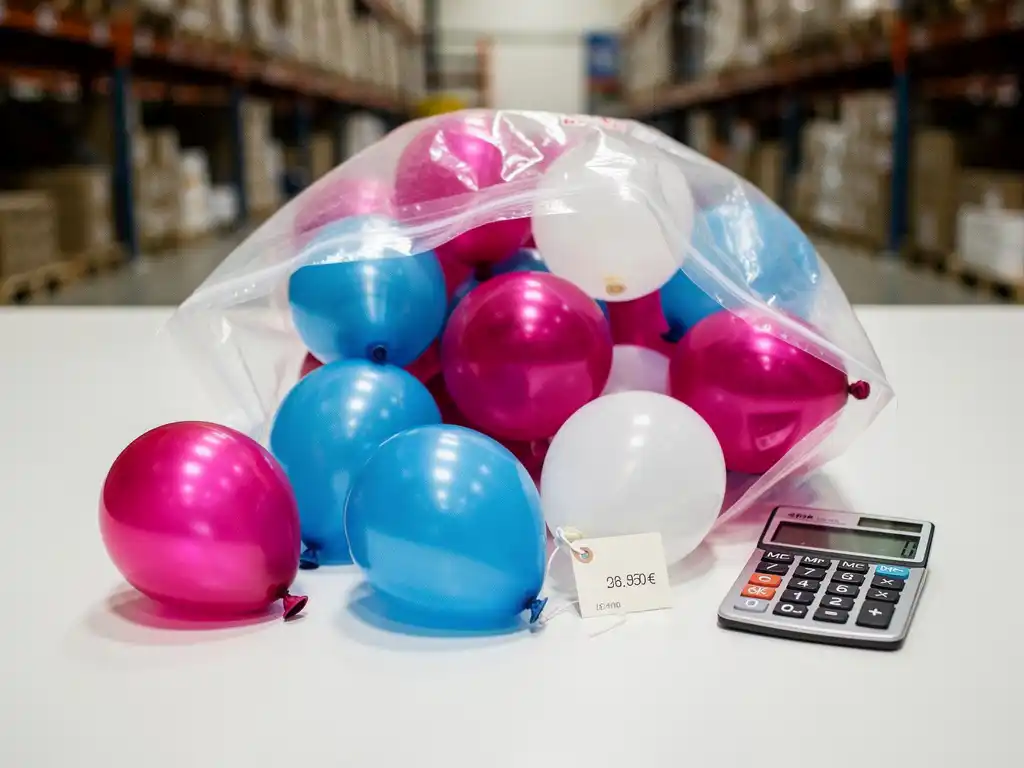

Buying balloons wholesale is one of the smartest ways to build a profitable resale business, whether you run a party supply shop, work as an event decorator, or sell online. But knowing how to turn a wholesale price into a competitive yet profitable retail price is where many resellers struggle. This guide walks you through everything you need to know, from understanding wholesale pricing to avoiding the most common mistakes that eat into your margins.
What does it mean to buy balloons at wholesale prices?
Buying balloons at wholesale prices means purchasing directly from a manufacturer or distributor in bulk quantities at a significantly lower cost per unit than retail. Wholesale pricing is reserved for businesses, not individual consumers, and typically requires a minimum order quantity. The lower unit cost is what creates the margin opportunity for resellers.
When you buy balloons wholesale, you are essentially cutting out the middleman. Instead of paying a retail markup at a party supply store, you source directly from a supplier that sells in volume. This gives you access to a broader product range, consistent stock availability, and pricing that makes resale commercially viable. The difference between your wholesale cost and your retail selling price is where your profit lies.
It is worth noting that wholesale suppliers often offer tiered pricing, meaning the more you order, the lower your cost per unit. Understanding these tiers helps you plan your orders strategically to maximize your margin from the start.
What profit margin should you add when reselling balloons?
Most balloon resellers aim for a gross profit margin of between 40% and 60%, though this varies depending on your market, competition, and the type of balloon. A keystone markup, which means doubling the wholesale cost to set your retail price, is a common starting point. However, the right margin for your business depends on your full cost structure.
Premium or specialty balloons, such as large foil shapes or custom-printed designs, often support higher margins because customers perceive greater value and have fewer direct comparisons to make. Standard latex balloons, on the other hand, are more price-sensitive because they are widely available and buyers can easily compare prices.
Consider your sales channel as well. Selling directly to consumers at events or through your own online store typically supports higher margins than supplying other retailers, where buyers expect a trade discount.
How do you calculate the resale price of wholesale balloons?
To calculate your resale price, start with your wholesale unit cost, add all associated costs, and then apply your desired profit margin. The basic formula is: Resale Price = (Total Cost Per Unit) divided by (1 minus Desired Margin %). For example, if your total cost per balloon is €0.50 and you want a 50% margin, your resale price should be €1.00.
Here is a simple step-by-step approach:
- Identify your wholesale cost per unit, including any volume discounts applied.
- Add all additional costs, such as shipping, storage, and packaging materials.
- Divide that total cost by your target cost-to-price ratio (for a 50% margin, divide by 0.5).
- Check the resulting price against your local market to confirm it is competitive.
- Adjust up or down based on product type, demand, and what competitors charge.
Always base your price on the full cost of getting the product to the customer, not just the invoice price from your supplier.
What costs should you include beyond the wholesale price?
Beyond the wholesale unit price, resellers must account for shipping and freight costs, storage and warehousing, packaging materials, transaction fees, and any labor involved in preparing orders. Ignoring these costs is one of the fastest ways to undercut your own margin without realizing it.
Here are the most common additional costs to factor in:
- Inbound shipping: The cost of getting stock from your supplier to your location.
- Packaging: Bags, boxes, tissue paper, or branded materials used when fulfilling orders.
- Storage: If you rent warehouse or storage space, allocate a portion of that cost per unit.
- Payment processing: Credit card fees or marketplace commissions if you sell through a platform.
- Labor: Time spent picking, packing, and shipping orders has a real cost.
- Returns and waste: Balloons can be damaged in transit or storage, so build in a small buffer.
Once you have a clear picture of your true landed cost per unit, your pricing decisions become far more accurate and your margins more predictable.
How does balloon type affect the resale price you can charge?
Balloon type has a significant effect on resale pricing because different materials, sizes, and designs carry different perceived values and production costs. Latex balloons are generally the most affordable to buy and sell, while foil balloons command higher retail prices due to their durability, visual appeal, and the complexity of their production.
Foil balloons in particular, especially shaped or character designs, can support considerably higher margins because customers associate them with premium occasions, and they last much longer than latex balloons. A large foil number balloon for a birthday, for instance, is a destination purchase where price sensitivity is lower.
Latex balloons, especially standard round ones, are high-volume, lower-margin products. The opportunity there is in selling in bulk, such as balloon bundles or party packs, rather than individual units. Specialty latex options, like biodegradable or pastel-finish balloons, can support a slightly higher price point if your target audience values quality and sustainability.
What pricing mistakes should balloon resellers avoid?
The most damaging pricing mistakes balloon resellers make include underpricing to compete on cost alone, failing to account for all hidden costs, and not adjusting prices based on product type or demand. These errors can make a business look busy while actually losing money on every sale.
Watch out for these common pitfalls:
- Pricing based on wholesale cost alone: Forgetting to include shipping, packaging, and labor leads to margins that disappear quickly.
- Matching the cheapest competitor: Competing purely on price is a race to the bottom. Differentiate through service, range, or quality instead.
- Using the same margin for every product: Premium items can and should carry higher margins than commodity lines.
- Not reviewing prices regularly: Wholesale costs change, especially with shipping fluctuations. Prices should be reviewed at least quarterly.
- Undervaluing convenience: Customers often pay more for fast delivery, ready-made packs, or expert advice. Price your service, not just your product.
Sustainable resale pricing is not about being the cheapest option. It is about understanding your full cost structure and communicating the value your customers receive.
How Globos Europe helps you get your balloon pricing right
We make it easier for balloon resellers to build a profitable business from the ground up. As a B2B wholesale partner with over 25 years of experience in the European party market, we offer the product range, pricing structure, and quality you need to price confidently and sell successfully.
Here is what we offer to support your resale business:
- Competitive wholesale pricing on latex balloons, foil balloons, and accessories under our own We Fiesta brand
- Tiered volume pricing so your unit cost decreases as your order size grows
- A broad assortment covering every occasion, from birthdays and weddings to corporate events
- Biodegradable latex balloons and FSC-certified products to support sustainable business positioning
- Private label options for resellers who want to build their own brand
- Membership in the European Balloon and Party Council, ensuring our products meet the latest safety and quality standards
Whether you are just starting out or scaling an existing operation, we are here to be your reliable wholesale partner. Visit Globos Europe to explore our full product range and get in touch with our team to discuss your business needs.
Frequently Asked Questions
How do I know if my wholesale balloon supplier is offering genuinely competitive pricing?
The best way to benchmark your supplier's pricing is to request quotes from at least two or three wholesale sources and compare the total landed cost, not just the unit price on the invoice. Factor in minimum order quantities, shipping terms, and whether tiered discounts are available. A reliable supplier like Globos Europe will be transparent about their pricing structure, so you can make a true apples-to-apples comparison and avoid being misled by a low headline price that comes with high freight costs.
What is the minimum order quantity I should expect when buying balloons wholesale, and how does it affect my pricing strategy?
Minimum order quantities (MOQs) vary by supplier but typically range from a few dozen units to several hundred, depending on the product type and supplier tier. Higher MOQs usually unlock lower unit costs, which directly improves your margin, but they also tie up more working capital and storage space. Start by ordering closer to the minimum to test product performance and demand, then scale up your order size once you have confirmed which lines sell well in your market.
Should I charge different prices for the same balloon depending on the sales channel I use?
Yes, absolutely. Pricing should reflect the true cost and value of each channel. Selling through your own website or at events allows you to capture a higher margin because there are no platform commissions and you control the customer experience. Selling through a marketplace like Etsy or Amazon introduces fees of 10–20% or more, which must be built into your price. Supplying other retailers means offering a trade discount, so your wholesale-to-retail spread needs to be wide enough to accommodate that without eroding your own profitability.
How often should I review and update my balloon resale prices?
At a minimum, review your prices quarterly, and immediately any time your supplier changes their pricing or your shipping costs shift significantly. Freight rates in particular can fluctuate seasonally, and failing to pass those increases on quickly is one of the most common reasons resellers see their margins quietly shrink. Set a recurring calendar reminder to check your landed cost per unit against your current retail prices, and treat pricing as an ongoing business process rather than a one-time setup task.
Can I offer discounts or bundle deals without hurting my profit margins?
Yes, as long as you calculate bundle pricing based on your full cost per unit rather than discounting from a price that already has a thin margin. Bundles and multi-pack deals are actually a smart strategy for balloons because they increase average order value and reduce the per-transaction cost of packaging and shipping. For example, bundling 10 latex balloons at a slight discount can move more volume than selling individually, while still delivering a healthy overall margin if your base cost is well understood.
What is the best way to handle pricing for seasonal demand spikes like Valentine's Day or Halloween?
Plan your inventory purchases well in advance of peak seasons to avoid paying premium prices for urgent stock or expedited shipping, both of which will compress your margins. During high-demand periods, there is often room to hold or even slightly increase prices on popular seasonal designs because supply is limited and buyer urgency is high. Conversely, use post-season periods to clear remaining stock at a modest discount rather than holding it indefinitely, freeing up cash for your next wholesale order.
How do I compete with large online retailers that sell balloons at very low prices?
Competing on price alone against high-volume online retailers is rarely a winning strategy for smaller resellers. Instead, focus on the areas where you can genuinely outperform them: faster local delivery, curated product selections for specific occasions, expert advice, custom bundles, or a personal customer experience. Customers who are planning a special event are often willing to pay a premium for reliability, convenience, and service quality. Position your business around value and expertise, not just the lowest price per balloon.
Related Articles
- Is it worth buying party products wholesale for a small event?
- How do birthday party products for adults differ from those for children?
- What birthday party products work for both indoor and outdoor parties?
- Are balloon arches available through party products wholesale suppliers?
- How do you order custom balloons wholesale?