
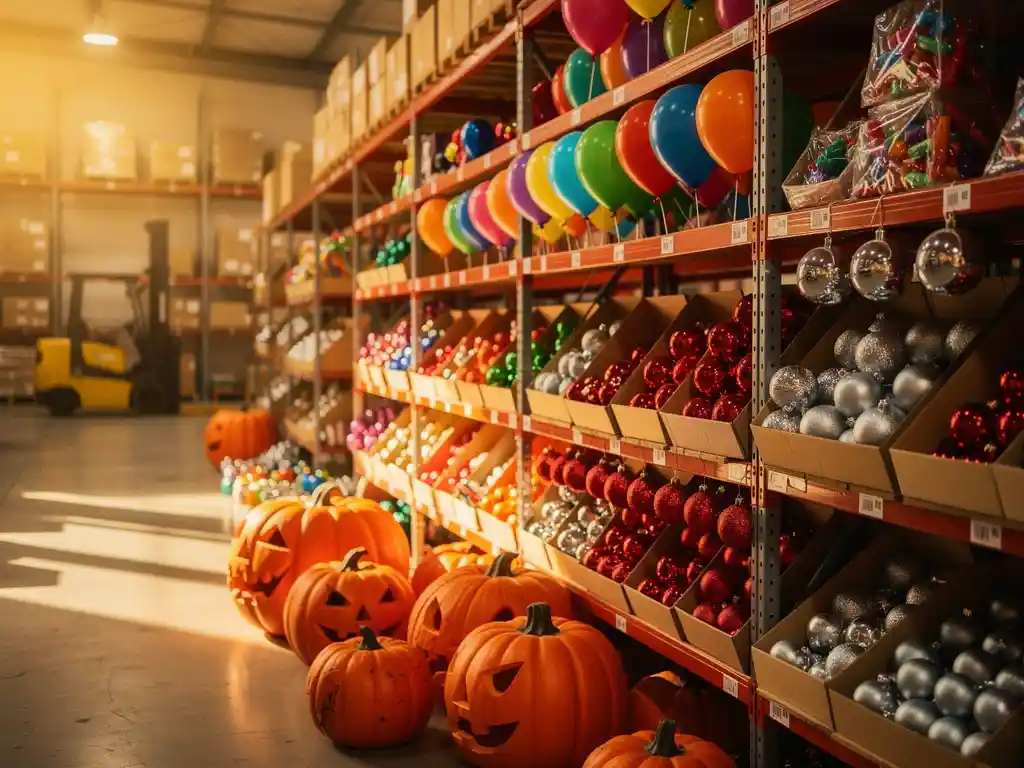

For businesses in the party and events industry, knowing what’s available and when can make or break a successful season. Whether you’re stocking a retail shop, planning a large-scale event, or expanding your product range as a decorator, understanding how party products wholesale availability works throughout the year is essential to staying competitive and keeping customers happy.
The good news is that the wholesale party market operates on a much broader and more flexible calendar than most buyers assume. From classic birthday staples to highly specific holiday collections, wholesale suppliers structure their inventories to serve buyers in every season. Here’s what you need to know.
What seasonal party products are most in demand throughout the year?
Seasonal party products follow clear demand cycles tied to cultural events, holidays, and recurring celebrations. The highest demand periods include Christmas, Halloween, New Year’s Eve, Valentine’s Day, Easter, and the summer graduation season. Products such as themed balloons, coordinated tableware, seasonal color palettes, and decorative accessories all spike during these windows.
Beyond the major holidays, there are consistent mid-tier demand periods driven by occasions such as Mother’s Day, Father’s Day, and back-to-school celebrations. These moments are often overlooked by smaller buyers but represent real revenue opportunities for retailers that stock up in advance. Wholesale buyers who track these secondary peaks tend to outperform those who focus only on the most obvious seasonal peaks.
Year-round staples such as birthday balloons, generic party tableware, and celebration banners maintain steady demand regardless of the season. These evergreen products form the backbone of most wholesale party product ranges and allow buyers to maintain consistent turnover between seasonal spikes.
How do wholesale suppliers manage stock for seasonal party items?
Wholesale suppliers manage seasonal party product stock through a combination of forward planning, pre-order windows, and tiered inventory systems. Most suppliers begin sourcing and warehousing seasonal lines months before the relevant holiday or event period, which means buyers who wait until the season arrives often face limited availability or longer lead times.
Pre-order and forward-buying systems
Many wholesale operations use a pre-order model for their most popular seasonal lines. This allows suppliers to gauge demand accurately and allocate production or import volumes accordingly. Buyers who participate in pre-order windows typically secure better pricing, guaranteed stock allocation, and earlier delivery windows than those who order reactively.
Warehouse and inventory strategies
Large wholesale suppliers often operate regional warehouses to manage the logistics of seasonal stock distribution. Carrying seasonal inventory requires significant storage capacity, which is why some smaller wholesalers rotate their seasonal ranges rather than holding everything simultaneously. Understanding your supplier’s warehouse model helps you plan your own ordering timeline more accurately.
What’s the difference between seasonal and year-round wholesale party products?
The key difference is demand consistency. Year-round wholesale party products maintain stable, predictable demand across all twelve months, while seasonal products experience sharp demand peaks tied to specific dates or holidays, followed by periods of low or no demand. This distinction directly affects pricing, availability, and minimum order quantities.
Year-round products include items such as latex balloons in standard colors, generic birthday decorations, ribbon, and foil number balloons. These lines are typically always in stock, offered at stable prices, and available with flexible order quantities. Seasonal products, by contrast, are often produced in limited runs and priced to reflect the short window in which they sell.
From a buyer’s perspective, year-round products are lower risk because unsold stock remains relevant and sellable. Seasonal products offer higher margin potential but also carry higher risk if purchasing decisions are mistimed. A balanced wholesale buying strategy typically combines a strong foundation of year-round lines with targeted seasonal buys placed well in advance of each peak period.
When should wholesale buyers place orders for seasonal party products?
Wholesale buyers should place orders for seasonal party products at least 8 to 12 weeks before the relevant selling season begins. For major holidays such as Christmas or Halloween, placing orders as early as 16 to 20 weeks in advance is advisable, particularly for high-volume or specialty items produced in limited quantities.
The reasoning behind early ordering goes beyond simply securing stock. Shipping lead times, customs clearance for imported goods, and your own internal receiving and merchandising processes all take time. If you order a Halloween range in September expecting it to arrive before October, you are almost certainly too late with most wholesale suppliers.
A practical approach is to build a seasonal buying calendar at the start of each year. Map out every relevant holiday and celebration period, then count backward from your intended in-store or in-stock date to determine your order deadline. Factor in your supplier’s stated lead times and add a buffer of at least one to two weeks to account for unexpected delays.
- Christmas and New Year: Place orders by August or September at the latest
- Halloween: Order by June or July for full-range availability
- Valentine’s Day: Order in November or early December
- Easter: Order in January or February
- Summer graduation and outdoor events: Order from February onward
How Globos Europe helps with wholesale party product availability
At Globos Europe, we understand that reliable stock availability is one of the most important factors for our wholesale partners. With over 25 years of combined experience in the European party market, we have built our inventory and logistics model specifically to support buyers across every season and celebration type. Here’s what we offer:
- A broad assortment of both seasonal and year-round party products, including latex and foil balloons, tableware, slingers, cake candles, and themed decorations
- Products available under our own We Fiesta brand, with consistent quality standards and distinctive packaging
- Compostable and FSC-certified product options for buyers prioritising sustainability
- Private label solutions for businesses looking to build their own branded range
- A warehouse in Etten-Leur and a commercial base in Amsterdam to support efficient European distribution
Whether you are planning your seasonal buying calendar or looking to strengthen your year-round product offering, we are ready to support you. Visit Globos Europe to explore our full wholesale range and get in touch with our team to discuss your specific needs.
Frequently Asked Questions
What happens if I miss the pre-order window for a seasonal product line?
If you miss the pre-order window, your options become more limited but not impossible. You may still be able to place a standard order, though you risk lower stock availability, longer lead times, and potentially higher pricing. In these situations, it's worth contacting your wholesale supplier directly to check remaining stock levels and discuss expedited shipping options if your timeline is tight.
How do I decide how much seasonal stock to order without over-buying?
The most reliable method is to base your order quantities on previous years' sales data for the same period, adjusted for any growth or changes in your customer base. If you're ordering a seasonal line for the first time, start conservatively and focus on versatile products — such as themed tableware or color-coordinated balloons — that have broader appeal and are less likely to sit unsold. Building a relationship with your wholesale supplier also helps, as experienced reps can often advise on which lines are trending or selling fastest in your region.
Are minimum order quantities different for seasonal products compared to year-round lines?
Yes, minimum order quantities (MOQs) can differ significantly between seasonal and year-round products. Seasonal items are often produced in limited runs, which means suppliers may set higher MOQs to justify the production or import volume, or conversely, restrict how much any single buyer can purchase once stock is running low. Year-round lines typically offer more flexible MOQs since they are continuously restocked. Always confirm MOQs with your supplier at the time of ordering, particularly for new or specialty seasonal products.
Can I mix seasonal and year-round products in a single wholesale order to reduce shipping costs?
In most cases, yes — and this is actually a smart way to consolidate freight costs and simplify your logistics. Combining a seasonal range order with a top-up of year-round staples like latex balloons or generic tableware means fewer shipments and lower per-unit delivery costs. Check with your supplier whether combined orders qualify for volume discounts or free shipping thresholds, as this can meaningfully improve your overall margin.
What should I look for when evaluating a new wholesale party products supplier?
Beyond pricing, the key factors to assess are stock reliability, lead time consistency, the breadth of their seasonal and year-round range, and the quality of their customer support. A supplier who consistently delivers on time and communicates proactively about stock changes is far more valuable than one offering marginally lower prices but unpredictable service. It's also worth checking whether they offer sustainability-certified options, private label capabilities, or pre-order programmes — features that can give your business a competitive edge as you scale.
How far in advance should I start planning my annual wholesale buying calendar?
Ideally, you should map out your full annual buying calendar in January of each year, or even in Q4 of the previous year if your business has a strong Christmas or New Year peak. Start by listing every holiday and celebration period relevant to your market, then work backward from your intended in-stock date using your supplier's stated lead times. Building this calendar early gives you time to negotiate pre-order terms, budget your spend across the year, and avoid the reactive, last-minute ordering that leads to stock shortages and missed sales.
Is it worth stocking niche or emerging celebration trends, or should I stick to proven seasonal lines?
A balanced approach works best. Established seasonal lines — Halloween, Christmas, Valentine's Day — should form the core of your seasonal buying because demand is predictable and the customer base is broad. However, allocating a smaller portion of your budget to emerging trends, such as gender-reveal parties, eco-themed celebrations, or culturally specific holidays growing in your region, can differentiate your offering and attract new customer segments. Monitor social media trends and ask your wholesale supplier which newer lines are gaining traction before committing to larger quantities.