Understanding the supply chain behind party products wholesale can save your business time, money, and a great deal of confusion. Whether you are setting up a party supplies shop, scaling a decoration business, or sourcing products for events, knowing who to buy from and why makes a real difference. The terms “wholesaler” and “distributor” are often used interchangeably, but they refer to distinct roles with different relationships, pricing structures, and levels of service. This guide breaks down exactly what sets them apart and how to make the right choice for your business. You can explore the full range of professional party supplies at Globos Europe.
What is a party products wholesaler?
A party products wholesaler is a business that purchases large quantities of party supplies directly from manufacturers and resells them in bulk to retailers, decorators, and other businesses at a lower per-unit cost. The wholesaler sits between the manufacturer and the end seller, making products accessible without requiring buyers to deal directly with factories.
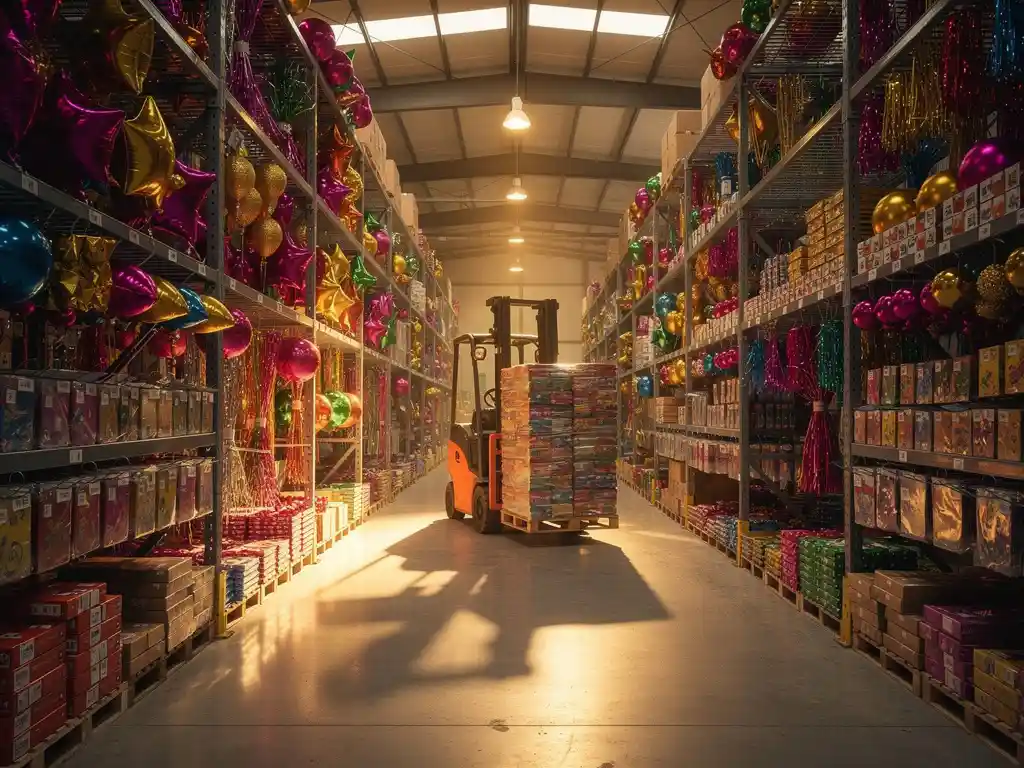
Wholesalers typically stock a broad range of products, from latex and foil balloons to tableware, banners, and themed decorations. Because they buy in high volumes, they can offer competitive pricing that makes reselling profitable. Most wholesalers operate on a business-to-business (B2B) model, meaning they sell to companies rather than individual consumers. Their warehouses are stocked with ready-to-ship inventory, which means shorter lead times and greater flexibility for buyers who need to replenish stock quickly.
What is a party products distributor?
A party products distributor is a business that acquires products from a manufacturer or brand and is responsible for getting those products into specific markets or sales channels. Distributors often have exclusive or semi-exclusive agreements with brands, giving them the right to sell within a defined geographic territory or customer segment.
Unlike wholesalers, distributors tend to focus on a narrower product range and invest more in brand representation, marketing support, and sometimes after-sales service. They act as an extension of the manufacturer’s sales operation. A distributor might supply large retail chains, regional wholesalers, or specialist trade buyers, depending on the agreement in place. They are less likely to sell mixed assortments and more likely to promote specific product lines from a single brand or a small group of brands.
What is the difference between a wholesaler and a distributor?
The key difference between a wholesaler and a distributor is their relationship to the supply chain. A wholesaler focuses on buying and reselling large quantities of products from multiple sources, while a distributor has a closer, often contractual relationship with a specific manufacturer and is responsible for market coverage within a defined territory.
Here is a practical comparison of the two roles:
- Product range: Wholesalers carry a wide, multi-brand assortment; distributors typically represent one brand or a limited portfolio.
- Pricing: Wholesalers offer bulk pricing to any qualifying buyer; distributors may have tiered pricing tied to sales targets or exclusivity agreements.
- Relationships: Wholesalers have open trade relationships; distributors often operate under formal contracts with manufacturers.
- Territory: Wholesalers can sell broadly across markets; distributors are often bound to specific regions or channels.
- Services: Distributors frequently offer brand support, marketing materials, and training; wholesalers focus on product availability and pricing.
For most small and medium-sized businesses in the party industry, a wholesaler is the more practical and flexible choice, while distributors are more relevant for businesses looking to represent a specific brand in a given market.
Who buys from a party products wholesaler?
Businesses that buy from party products wholesalers include party supply retailers, event decorators, florists, balloon artists, supermarkets, gift shops, and online sellers. Essentially, any business that needs a consistent supply of party goods at trade prices is a typical wholesale customer.
The customer base for party products wholesale is broader than many people expect. A small independent party shop and a large event decoration company may both source from the same wholesaler, simply ordering different quantities. Wholesalers in Europe also supply other wholesalers in smaller markets that need access to a wider range than they can source locally. Some wholesalers, including those operating internationally, also serve professional decorators who need specialist items such as high-quality foil balloons, themed tableware, or branded accessories that are not available through general retail channels.
When should a business choose a wholesaler over a distributor?
A business should choose a wholesaler over a distributor when it needs variety, flexibility, and competitive pricing without being tied to a single brand. If your goal is to stock a broad range of party products and respond quickly to changing customer demand, a wholesaler is the right partner.
Choosing a distributor makes more sense when you want to become the official seller of a specific brand within your region, or when a manufacturer requires you to go through an appointed distributor to access its products. For most party retailers and event professionals, however, a wholesaler offers greater freedom. You can mix and match products from different collections, adjust your orders based on seasonal trends, and avoid the minimum commitment levels that distributor agreements often require. The ability to source everything from one wholesale partner also simplifies logistics and reduces the administrative burden of managing multiple supplier relationships.
How do you find a reliable party products wholesaler in Europe?
To find a reliable party products wholesaler in Europe, look for a supplier with a broad and well-curated product range, transparent pricing, clear minimum order requirements, and a demonstrable commitment to product quality and compliance with European safety standards.
Here are the key factors to evaluate when assessing a potential wholesale partner:
- Product safety and compliance: Ensure products meet EU safety regulations, such as the Toy Safety Directive 2009/48/EC for items marketed to children.
- Sustainability credentials: Look for suppliers offering biodegradable, compostable, or FSC-certified products if your customers value eco-conscious choices.
- Industry memberships: Membership in bodies such as the European Balloon and Party Council signals a commitment to professional standards and up-to-date industry knowledge.
- Stock availability: A reliable wholesaler should maintain consistent inventory so you are not left without key products during peak seasons.
- Private label options: If brand differentiation matters to your business, check whether the wholesaler offers own-brand or private-label solutions.
- International experience: A wholesaler with experience serving buyers across multiple European markets understands cross-border logistics and documentation.
Trade fairs, industry associations, and referrals from other businesses in the party sector are also effective ways to identify trustworthy suppliers. Always request samples before committing to large orders, and review the wholesaler’s return and quality assurance policies carefully.
How Globos Europe supports your party products wholesale needs
We are a B2B party products wholesaler based in Amsterdam, with a warehouse in Etten-Leur, serving decorators, retailers, and wholesalers across Europe. With over 25 years of combined experience in the European party market, we understand what professional buyers need: consistent quality, a broad assortment, and a partner they can rely on.
Here is what working with us looks like in practice:
- A wide range of latex and foil balloons, balloon accessories, tableware, garlands, cake candles, and themed party collections
- Products available under our own We Fiesta brand, with distinctive packaging and high quality standards, as well as private-label options
- Biodegradable latex balloons that comply with the Toy Safety Directive 2009/48/EC
- Compostable and FSC-certified products for sustainability-conscious buyers
- Membership in the European Balloon and Party Council and Amfori, keeping us aligned with the latest industry and environmental standards
- B2B service for international customers, with experience across European markets
Whether you are a party shop looking to expand your range or a decorator searching for a dependable supply partner, we are here to help. Visit Globos Europe to explore our assortment and get in touch with our team to discuss your wholesale requirements.
Frequently Asked Questions
What minimum order quantities should I expect when buying party products wholesale?
Minimum order quantities (MOQs) vary significantly between wholesalers, but most B2B party suppliers require a minimum spend or unit count per order rather than per product line. Some wholesalers set a minimum order value (for example, €200–€500), while others require minimum quantities per SKU. When evaluating a new wholesale partner, always ask for a clear breakdown of MOQ policies upfront, as these directly affect your cash flow and storage requirements — especially if you are just starting out.
How do I know if a wholesale party supplier's products meet EU safety regulations?
Ask the wholesaler for documentation such as CE marking, Declaration of Conformity, and compliance certificates referencing relevant EU directives — particularly the Toy Safety Directive 2009/48/EC for any products that could be used by or marketed to children, including balloons. A reputable wholesaler will have these documents readily available and will be transparent about which products carry which certifications. If a supplier is hesitant to share compliance documentation, treat that as a red flag.
Can I source both eco-friendly and standard party products from the same wholesaler?
Yes, many established party products wholesalers now carry both conventional and sustainable product lines within the same catalogue, making it easy to cater to different customer segments without splitting your sourcing across multiple suppliers. Look for wholesalers that stock biodegradable latex balloons, FSC-certified paper products, and compostable tableware alongside their standard range. This flexibility allows you to respond to growing consumer demand for eco-conscious options without overcomplicating your supply chain.
What is the best way to start working with a new party products wholesaler for the first time?
Begin by requesting a product catalogue and price list, then order a sample assortment before committing to a large first order — this lets you assess product quality, packaging standards, and delivery reliability firsthand. Clarify payment terms, lead times, and return policies before placing any commercial order. Starting with a modest trial order also gives you the chance to evaluate how the wholesaler communicates and handles any issues, which is often just as important as the products themselves.
How should I manage seasonal demand spikes when buying party supplies wholesale?
Planning ahead is critical in the party industry, where demand for specific products can surge sharply around key seasons such as Christmas, Halloween, Valentine's Day, and graduation periods. Work with your wholesaler to understand their replenishment cycles and flag high-demand periods well in advance, ideally placing forward orders 6–8 weeks before peak season. A wholesaler with strong, consistent inventory levels and transparent stock availability updates will help you avoid the costly problem of running out of bestsellers at the worst possible moment.
Is it possible to get private-label party products through a wholesaler, and is it worth it for smaller businesses?
Yes, a number of party products wholesalers offer private-label or own-brand solutions, where products are packaged under your business's branding rather than the wholesaler's. For smaller businesses, this can be a worthwhile investment if brand differentiation is a priority — for example, if you supply corporate events, hotels, or retail chains that prefer branded consistency. However, private-label arrangements often come with higher MOQs and longer lead times, so it is worth assessing whether your order volumes and margins justify the added complexity before committing.
What common mistakes should new businesses avoid when choosing a party products wholesale supplier?
The most common mistakes include choosing a supplier based on price alone without verifying product quality or compliance, failing to read the fine print on MOQs and return policies, and spreading orders across too many suppliers without building a strong relationship with any single one. New buyers also frequently underestimate the importance of consistent stock availability — a cheap supplier that regularly runs out of key lines will cost you more in lost sales and emergency sourcing than a slightly pricier but reliable partner. Always prioritise reliability, transparency, and communication alongside competitive pricing.